This very destructive and insidious pest was first detected around 2015 in Lancaster County Pennsylvania.
Just yesterday we detected one example of ALM eggs laid on some wild garlic growing very close to the main garlic crop. So it’s here in RI folks and I will keep you updated on our success (or failure) to prevent crop losses of our garlic, leeks, onions, chives and shallots this season.
Our initial approach is to protect our plants using lightweight floating row cover.
Our leek, main crop onion and shallot seedlings have been prophylactically sprayed with Spinosad ( Cap’n Jacks Deadbug) and will be transplanted into the main garden in about a week.
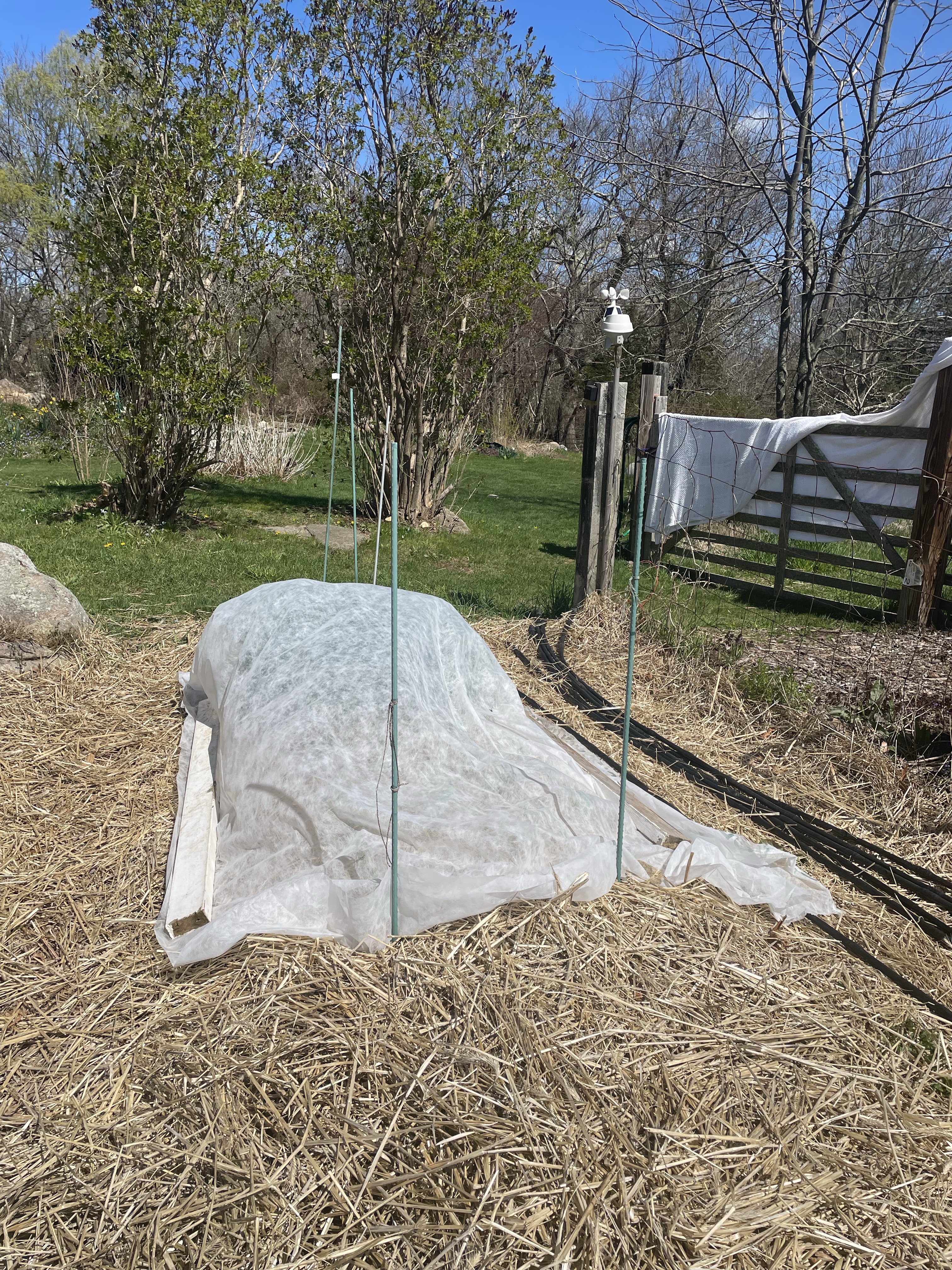
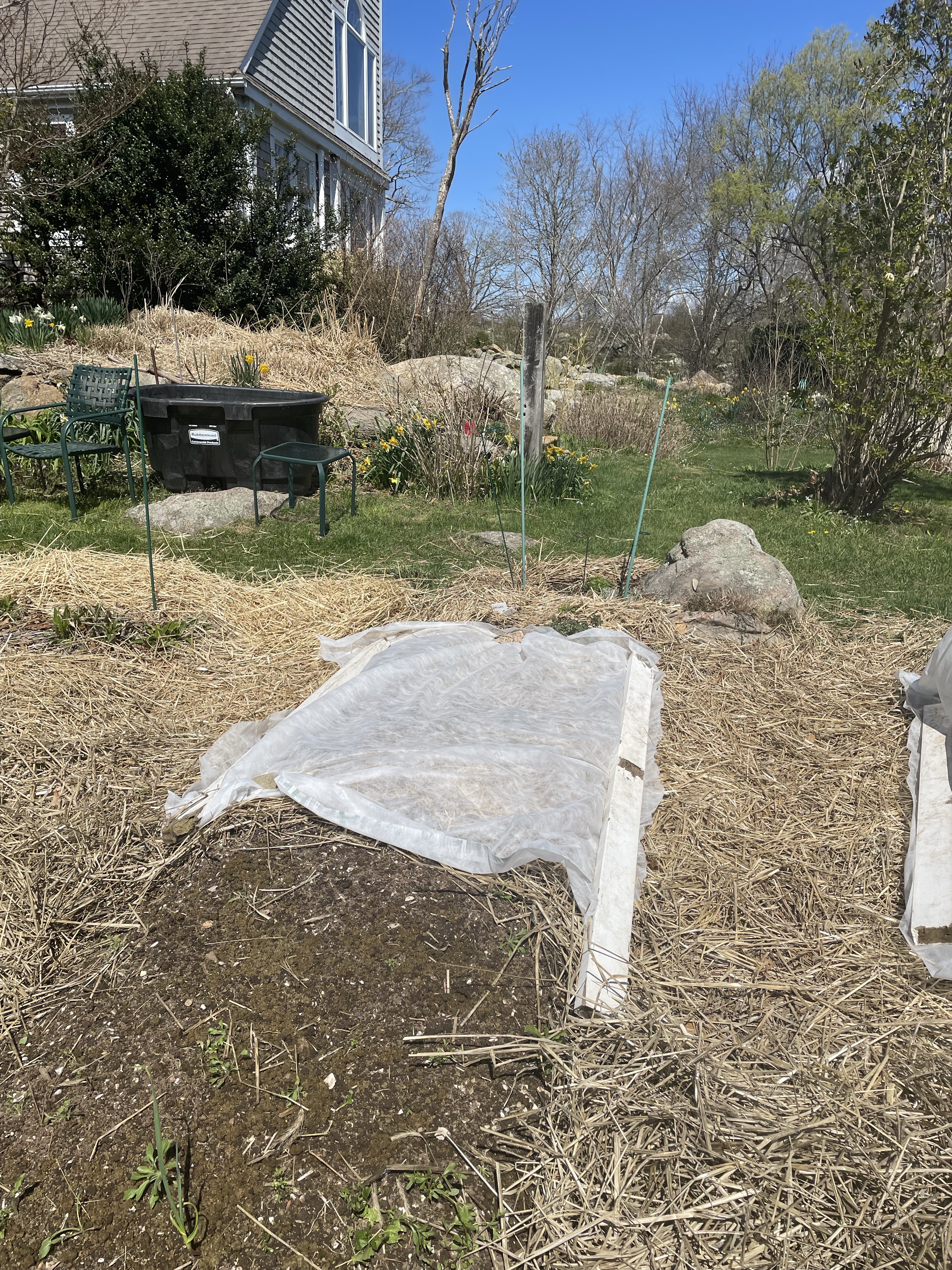
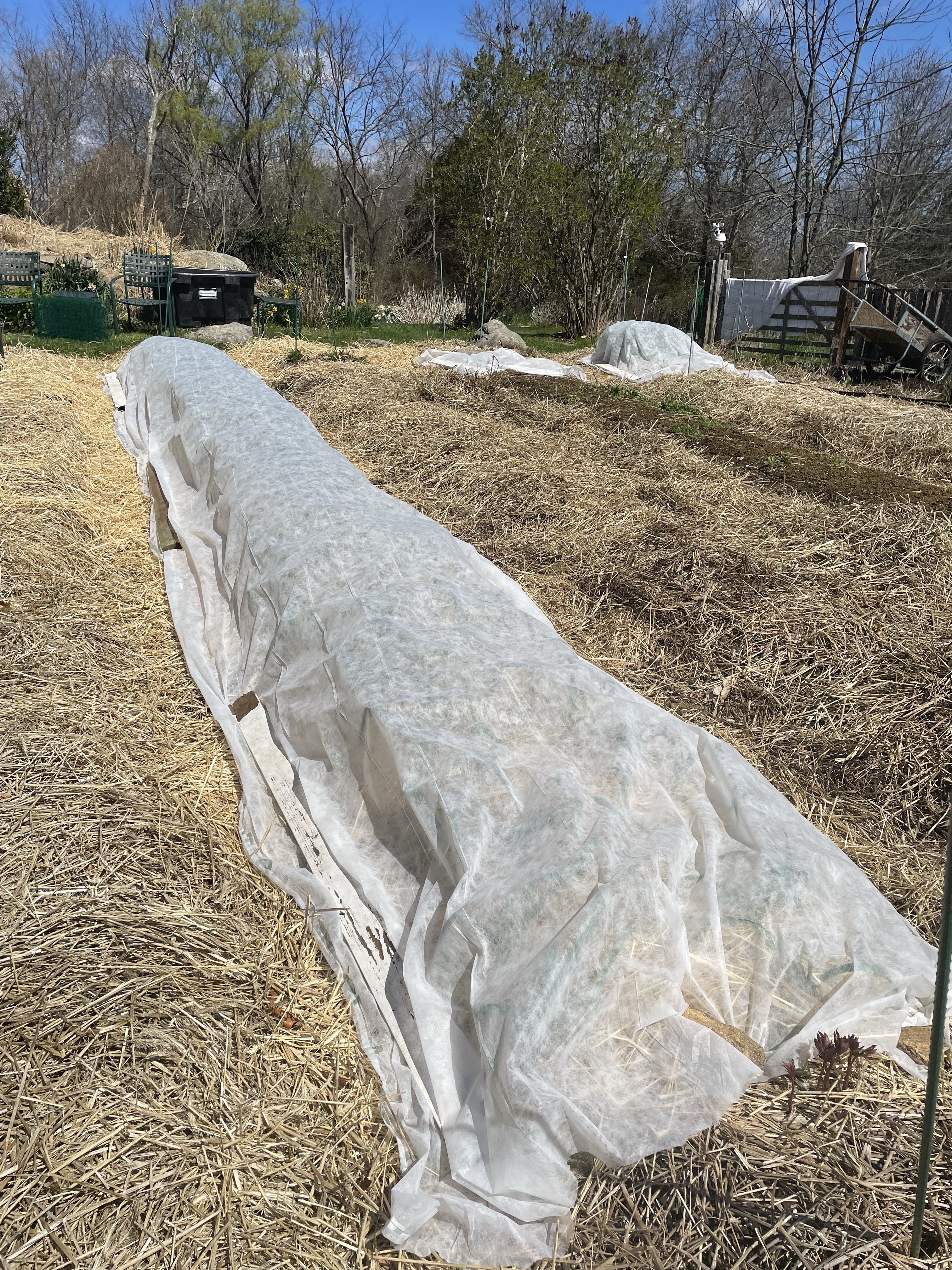
Happy Gardening 🌱🌱🌱
Below you will find a very brief but informative article courtesy of the https://extension.psu.edu.
Preventing Allium Leafminer in Garlic Plantings
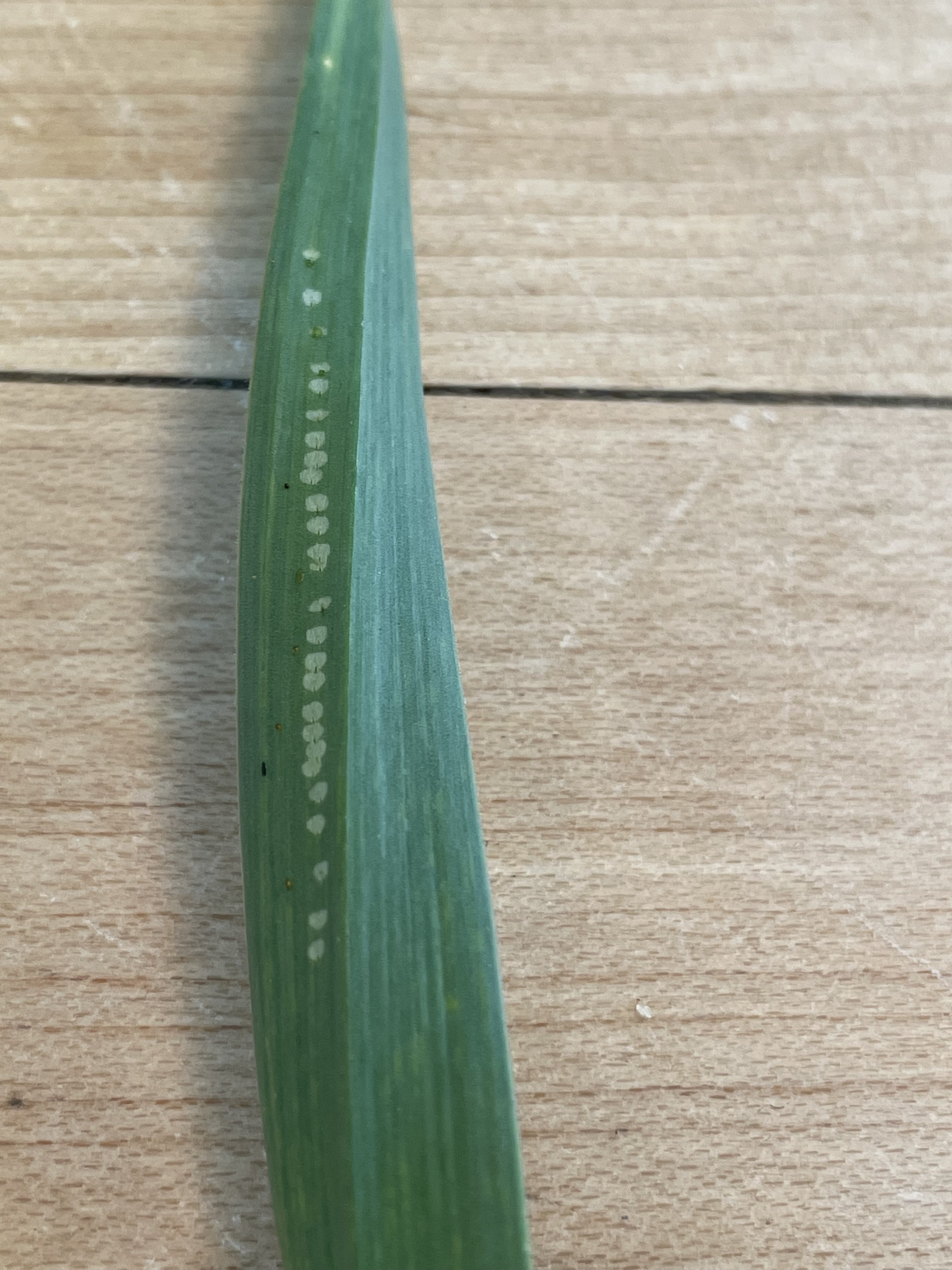
Allium leafminer targets plants in the allium, or onion-related, family. It may be especially troublesome to those who enjoy growing their own garlic.

ARTICLES
UPDATED: SEPTEMBER 22, 2021

Photo credit: Tim Elkner
The allium leafminer (ALM) is a fairly new pest to Pennsylvania garlic growers. Its first North American detection was in Lancaster County, Pennsylvania in 2015: Allium leafminer (Phytomyza gymnostoma). It is a non-native pest that can devastate crops in the allium family, including garlic, onions, leeks, shallots, chives, and even wild onions.
Identification and Symptoms
The adult form of ALM is a small fly, 1/8 inch long, black with distinctive orange patches on the head. In early spring, the female finds a plant in the allium family and makes a slit in a leaf with her ovipositor. These slits formed in straight lines are the telltale sign of allium leafminer infestation. If you discover lines of white dots on top of the leaves of your garlic, your crop is infected. The males and females are believed to feed on the sap that seeps from the holes for about a week before they mate and the female starts to lay eggs through the slits. Eggs become larvae, yellow in color and about a third of an inch long. The larvae are the most destructive phase of the fly cycle, eating the soft tissue of the plant and mining down toward the bulb. The plant will be weakened, prone to secondary fungal infections and bacterial rot. As a result, the plant’s growth is stunted, leaves are distorted, and garlic bulbs will be smaller. The last stage of the fly cycle will be the pupa, which appears as a mahogany case the size of a grain of rice. Up to one hundred of them can be found under the first layer of the foliage, near or inside the bulb. The development of pupa into the adult ALM will take the whole summer. The second generation will emerge in the fall beginning a new cycle of feeding and infestation. There is no cure if your plants are infected. The use of preventive measures will ensure that you will grow a healthy crop.
Control
Cultural prevention
- Rotation planting: If you want to grow healthy garlic, free of ALM, chose a site where a member of the allium family has not been grown for at least one year; a longer rotation is even better. Pupae overwinter in the soil and the fly will readily infect your plants in the spring or fall if given the chance.
- Cover cropping: Precede your planting of garlic in the fall with a crop of collards, mustard, or cabbage. At Rodale Institute, a mix of rapeseed, mustard, and daikon radishes was successful to diminish the rate of ALM in succeeding onion crops. The plants in the cabbage family produce sulfur that will transfer to the garlic and makes it more pungent. The fly prefers less pungent targets. Another benefit of the brassica cover will be the diminishing rate of nitrogen in the soil. Brassica do not bind with mycorrhizal fungi that helps most plants to absorb more nutrients from the soil and create higher nitrogen level. More nitrogen in the plant attracts more flies. Avoid high nitrogen fertilizer when growing garlic.
Physical Barrier
One of the most effective ways of protecting your crop from ALM is to use row covers in spring (March/April) and fall (September/October). Be sure no infected plants were in the bed before. The row cover should be high enough not to touch the plants. Hoops with garden fabric make great row covers. ALM is tiny, so you need to ensure that the edges of the fabric are pinned to the ground or the edges are buried. A good practice is to cover the garlic at planting time in the fall and remove the cover for winter. A thick mulch of dried leaves or hay will prevent heaving from possible frost. The cover should be put back in spring in March. The overwintering pupae will emerge in late March and will be active for five to seven weeks. Insect netting can be removed when there are no more adults flying. For up-to-date information, look for allium leafminer pest alerts on Penn State Extension’s website.
Good Sanitation Practices
At the end of the growing season, the removal of all infected material is critical. Do not compost infected materials, but bag and trash them.
If you have experienced a heavy ALM infestation, you can solarize the soil. Cover the bed with clear plastic, burying the edges to trap the heat. Keep the cover for four weeks during the summer. Solarization will not only kill ALM pupae but will decrease soil pathogens and increase beneficial microbes that will benefit plant growth later.
 Garden on the Hill