After giving up our flock of sheep several years ago (a super source of fertilizer and moisture-holding organic matter), we have been looking for organic ways to enrich our garden soil with both macro and micronutrients. We have been trying to utilize no-till or minimum till methods to refresh the planting beds for this season.
After extensive research we settled on a combination of winter rye and hairy vetch, which I fondly refer to as “scary” vetch, as our winter cover crops. The hairy vetch is an excellent nitrogen fixer as evidenced by the numerous nodules present on its roots (courtesy of its close relationship with the rhizobium bacteria added to the seed mixture).
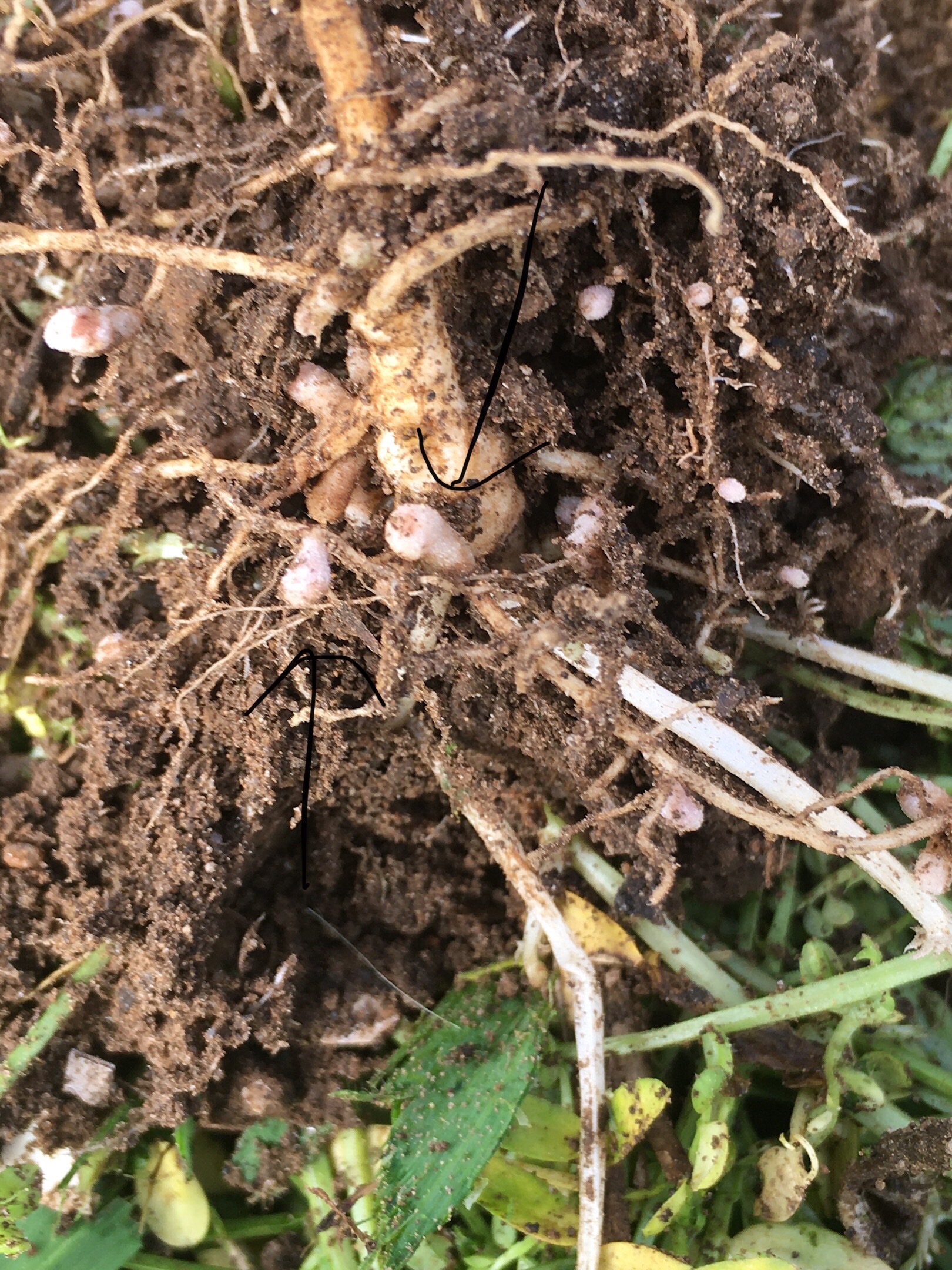
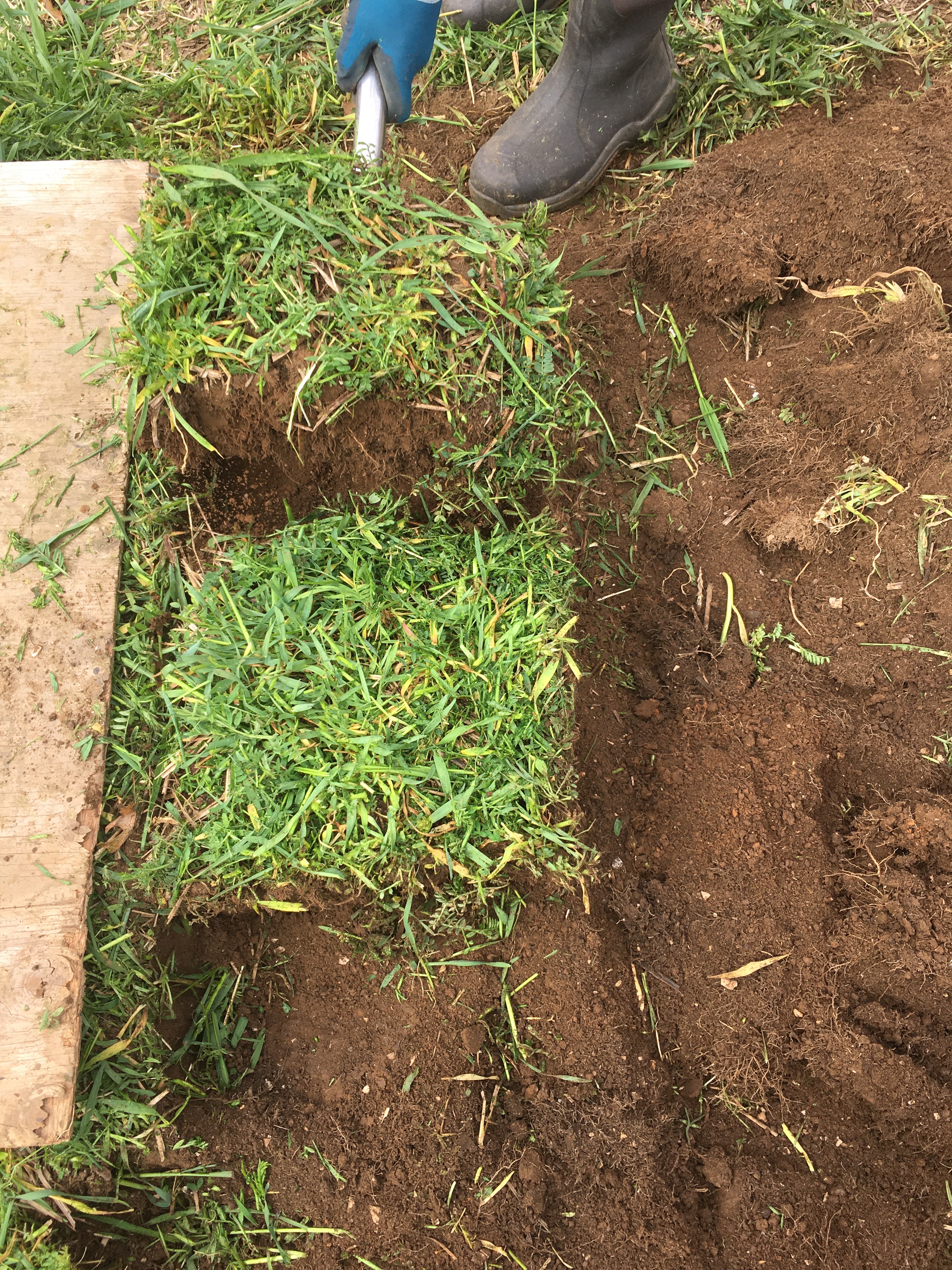
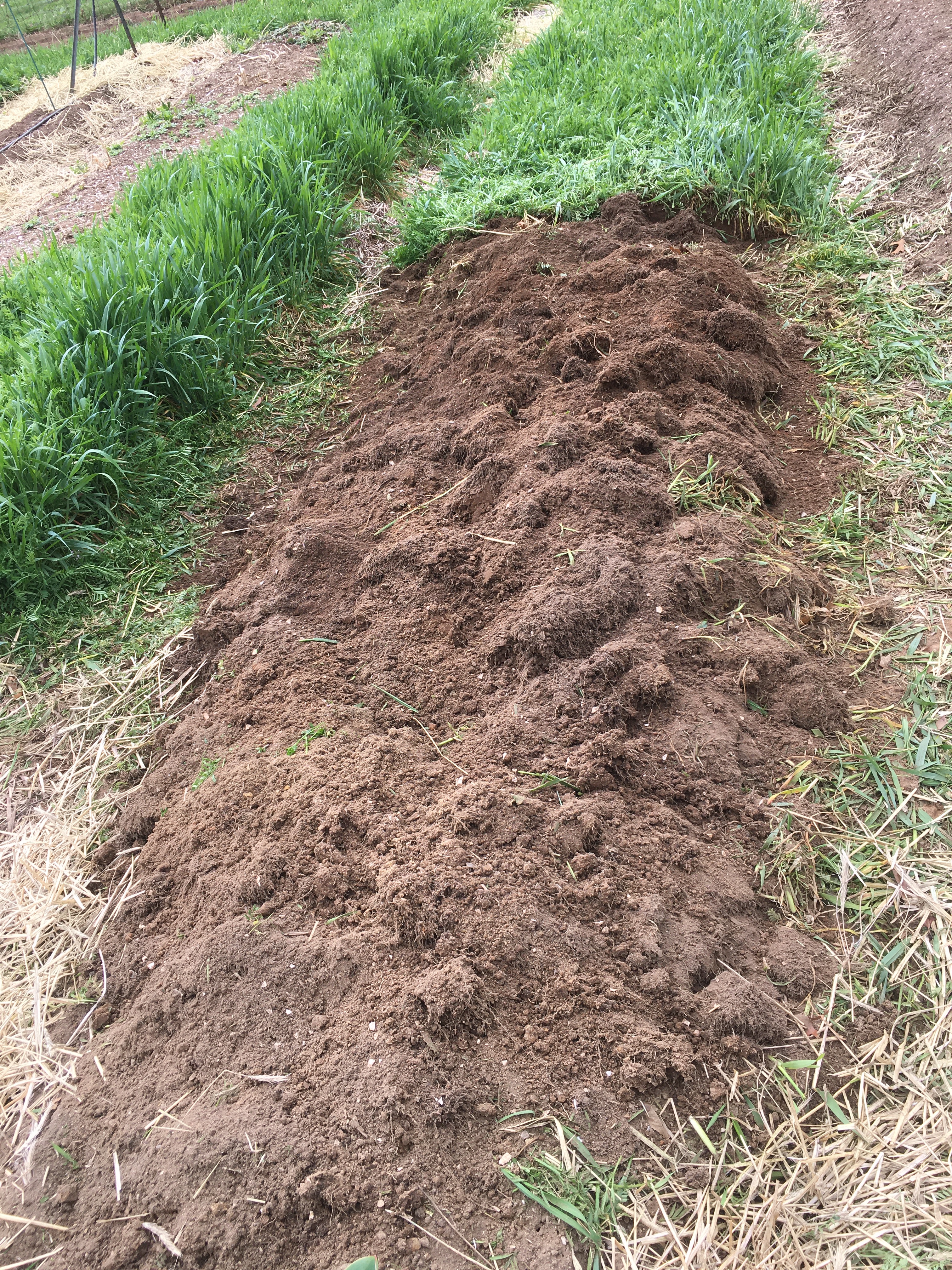
With a concerted effort to disturb the soil structure as little as possible we decided to try several approaches that would incorporate the nitrogen-rich vetch into the planting beds. The garden beds are approximately 30 feet long. The first third of a bed was turned over, leaving the roots and nodules intact.
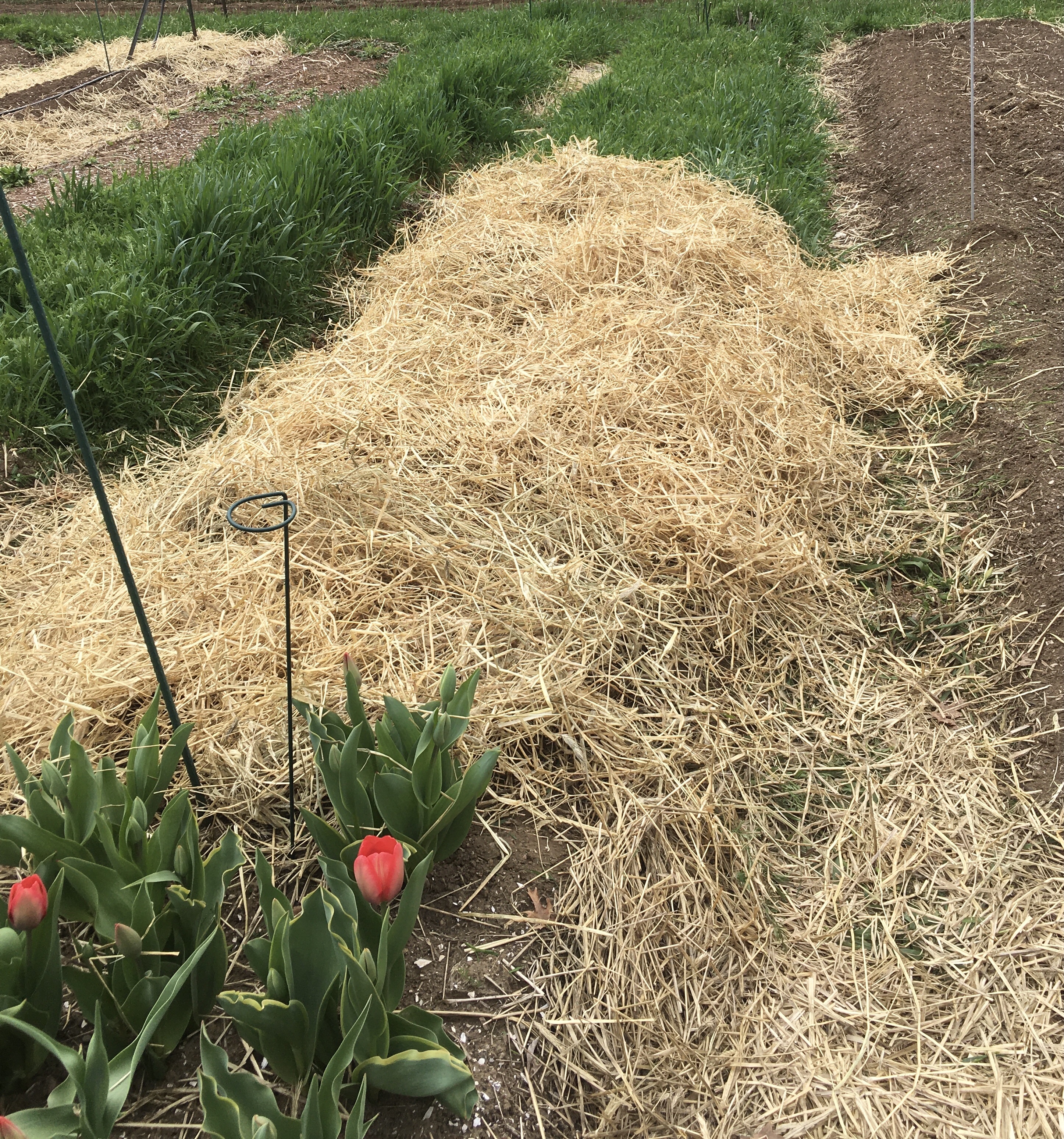
The second third of the bed was not turned over, just covered with a thick layer of straw after the rye and vetch were closely cut with a string trimmer. The last section was also trimmed close but was covered with newspaper to prevent light from encouraging new growth.

A thick layer of straw was placed over all three sections of this bed to stop new growth by excluding light.
Our working theory is that rye and vetch will be sufficiently killed off to allow for planting in individual holes or trenches in the center.
We really don’t know how any of this will work but as said before, it is an experiment.
As an aside, the turning in method is not for the feint of heart or muscle. It is really labor intensive but can easily substitute for 30 minutes at the gym.😎
The use of straw as mulch in our garden has saved us numerous hours of pulling weeds (both in pathways and planted beds) and is a great moisture holder. The straw eventually decomposes and contributes to the overall organic material of the soil.
So what are we looking for? Nutritious, healthy garden soil that will support vigorous growth of flowers and vegetables without adding synthetic chemicals and will respect the fungal and microbial life within it.
 Garden on the Hill
Great Experiment. I am excited to hear which of the three methods are the easiest and best approach to enrich the soil.
LikeLike